
The US–Israel war against Iran highlighted the significance of the sea in shaping geopolitics, not only for the contestants of the war but also for all coastal states. The blockade of the Strait of Hormuz by Iran and the US response highlighted the strength of naval power in influencing military outcomes, whatever they may be, and indicated a higher trend of investment in the maritime domain in the future.
In the midst of this, the Pakistan Navy’s efforts towards maritime cooperation and the safety and security of maritime operations in the Arabian Sea not only brought the country to the centre stage of geopolitical dynamics but also gave traction to the maritime dimension of Pakistan’s national security and well-being.
Considering Pakistan’s military and strategic calculations and the recurrence of conflict with its adversary, where the navy and its role have normally been obscure, the question arises: What is the value of the Pakistan Navy?
It is the attributes and characteristics of the sea – the operating environment of the navy – that render naval forces important and shape their structure. The sea’s importance for prosperity, security and identity argues for and justifies the existence and build-up of naval forces. Therefore, an understanding of the sea is important to understand the navy and naval warfare. Whereas neglecting to understand and embrace the importance and understanding of the sea is equivalent to neglecting the maritime dimension of national security and strategy. This logic necessitates an appreciation, recognition and embrace of the sea and its critical importance for the nation’s well-being.
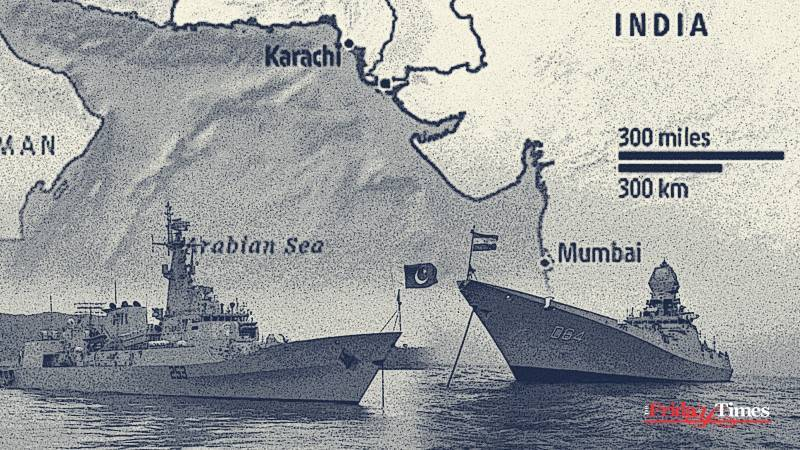
The operating environment of the Pakistan Navy (PN) is the Arabian Sea and the Indian Ocean. One can estimate the strategic significance of the Indian Ocean region from its stretch that connects the eastern coast of Africa with the western coast of Australia and from its potential for global well-being, as it accounts for one-third of global trade, and it is surrounded by 39 states and about 3 billion people.
The Arabian Sea is one of the most important naval operating environments of the Indian Ocean region, with important waterways – the Gulf of Aden and the Gulf of Oman – that connect to the Red Sea and the Arabian Gulf, merging into it.
It has key international trade routes, including the Gulf of Aden through the Strait of Bab el-Mandeb, the Gulf of Oman, routes towards the Strait of Malacca and canal networks such as the Suez Canal. According to the International Energy Agency (IEA) statistics, around 25–30% of global crude oil and petroleum products pass through the Straits of Hormuz and Bab el-Mandeb daily.
These statistics become acute considering that the Arabian Sea is highly volatile for maritime activities, as it is surrounded by a den of hostility and dicey relations. It is bounded by Iran and Pakistan in the north, India on the east, and the Arabian Peninsula, Oman, Somalia and Yemen in the west.
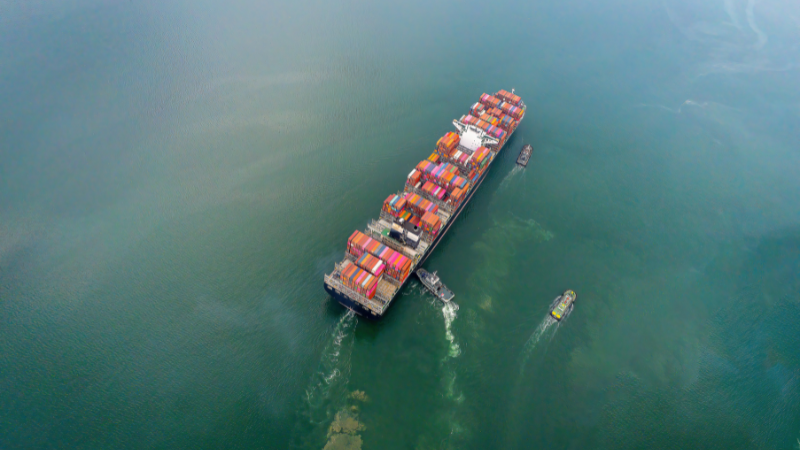
The sea is very important for Pakistan. About 95% of Pakistan’s trade volume is transported by sea via Karachi, Port Qasim and Gwadar ports. These ports help access international shipping routes, including those linked to the Strait of Hormuz and the Red Sea.
Also, the development of Gwadar’s modern port connects landlocked states of Central Asia and maritime powers, such as China, to global trade and communications networks. This highlights the critical significance of maritime force for Pakistan.
Moreover, Pakistan’s population, as well as economic and financial flows, are concentrated near the sea, where natural and/or man-made disasters and crises tend to cause catastrophic suffering for the country. The naval force has more uses than wartime operations compared to other forces, as the navy has to contribute to the country’s economy and prosperity by protecting sea lines of communication, shipping lanes and civilian vessels.
Moreover, the naval force, compared to other forces (land and air), is a mobile force with a light footprint. Therefore, the Pakistan Navy’s contribution to deterrence lies in its ability to loiter while remaining minimally intrusive. This makes the Pakistan Navy a key component of fighting and deterrent power.
The attributes of the Arabian Sea and the Indian Ocean region at large require the Pakistan Navy to maintain a layered posture that is appropriate for coastal as well as deep-sea (Indian Ocean region) naval operations; that is competent to maintain and ensure safe and secure regional connectivity; and that is capable of extending leverage to geopolitics.
Currently, the naval assets of submarines (mainly Agosta-class), highly manoeuvrable vessels such as frigates, corvettes, mine warfare assets, and offshore patrol vessels (OPVs) allow confident conduct of sea-denial coastal operations in a congested, complex and restrictive environment of its littorals.
However, for deep and open-water operations, the Pakistan Navy needs to build an autonomous fleet characterised by high levels of integration, expeditionary calibre, long endurance and autonomy capable of establishing sea control and power projection to protect its maritime interests, including sea lanes of communication, and ensure regional connectivity.
The periodic induction and integration of Hangor-class submarines, autonomous long-range naval capabilities and network-centric technologies and solutions can help the Pakistan Navy support the security of supply chains, lanes of communication and power projection in blue waters. Such a fleet will not be devoid of challenges.
Where the sea is the raison d’être of the Pakistan Navy and its critical significance to the nation’s well-being demands overcoming sea blindness, on the one hand, the build-up of maritime force needs to be justified financially and economically.
Moreover, the Hangor-class submarines with large displacement and Stirling engines will provide silent endurance and attack capability greater than the Agosta-class, but the new submarines are still not equipped with acoustics that can describe them as super silent. This can be challenging in an aggressively competitive environment of the Indian Ocean region.
Quieting technology is an area in which Pakistan needs to work. Lastly, maritime operations generally require a great degree of distributed and delegated command. The progressive development of maritime forces in line with its posture that is defined and shaped by its operating environment could become at odds with the country’s drive towards structural centralisation of its higher defence.
The distributed side of command can be addressed through technological solutions, but the delegated side of command requires active thinking at the structural and policy levels.
In general, land forces hold critical significance due to their operating domain, that is, land, being important in generating decisive military outcomes, but the navy is important in delivering critical military effects, and this is what the world is witnessing these days.
With this logic in mind, the Pakistan Navy may not hold a dominant discursive position in a military and security context, but it is critical in providing vital support and security during war, and economic and communication links in peace.
While the people of Pakistan ultimately live on land, their economic, social, communication, and national security well-being transits the maritime domain.