
The economy of Pakistan is based on the seaports. The country has over 95 percent of international trade that passes through its ports. But over the years, billions of dollars have been quietly drained by corruption and mismanagement. Change is finally coming, however, the journey still has a long way to go.
In Pakistan, there are three seaports, namely Karachi Port, Port Qasim, and Gwadar Port. Karachi is known as the gateway of Pakistan and it takes over 125 million tonnes of cargo each year. Port Qasim deals with 51 percent sea traffic. The Gwadar that is constructed under the China Pakistan Economic Corridor (CPEC) can be able to link Pakistan to the Middle East and Central Asia. None of these ports is operating to its full capacity. Karachi only functions at 52 percent. Port Qasim at 65 percent and Gwadar port with all its great potential operates at only 5 to 10 percent. It is not only infrastructure; it is governance.
Corruption costs the economy a lot. The amount paid out to illegal payments during container clearance is no less than about Rs 112,000 per container, or approximately 40 million a year. Shipping firms complain of being requested to pay tiny informal payments such as cigarettes, drinks, cash, in order to transport goods. The dwell time increases expenses and decelerates trade. Recently, Senator Faisal Vawda spoke of mismanagement of land at Korangi Fisheries Harbour and demanded immediate reform. Pakistan had the score of 28 out of 100 in the 2025 Corruption Perceptions Index, compared to 27 previous year, and this remains concerning.
To get a viable road map, Pakistan does not have to go far. India had almost the same issues, bureaucratic delays, bribes, and delays in cargo. The ports are a regional success story today. Jawaharlal Nehru Port (JNPT) in the vicinity of Mumbai had a reputation of long queues and bribery. It is the best container port in Asia today. The average container dwell time reduced to less than three days compared to more than six days. It has currently become one of the best ports in the world in the World Bank Logistics Performance Index. India’s key reforms include SWIFT System, Direct Port Delivery, Sagarmala Programme and RFID tracking and CCTV. The 2014-2023 World Bank Logistics Performance Index ranking of India improved by 22 positions. Needless to say, digital reform, combined with political will, equals results.
Pakistan is making moves. Maritime Anti-Corruption Network (MACN) in collaboration with UN Global Compact has initiated a collective action programme to curb corruption in ports. It is collaborating with Pakistan Single Window (PSW) to develop a platform of public grievance whereby businesses can report corrupt demands without insecurity.
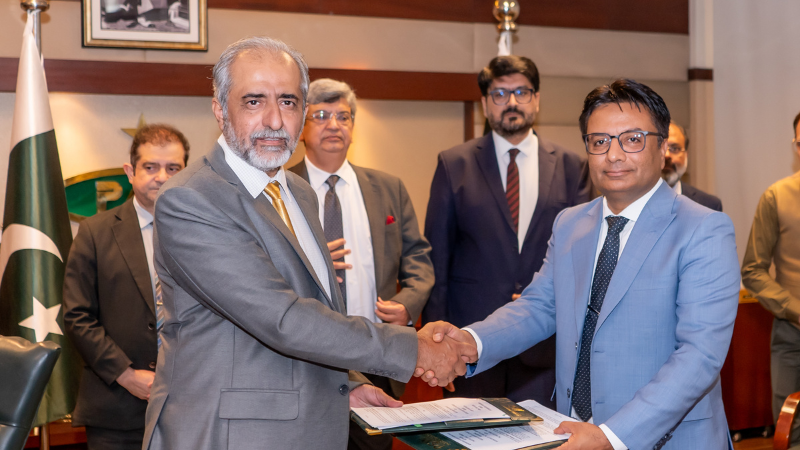
The PortVerse programme by PSW is an effort to ensure that all the port operations are unified under a single digital network similar to the case of India, with SWIFT. WeBOC (Web-Based One Customs) system is already developing digital audit trails to identify illegal transactions. Cargo auctions have been promised to be done electronically by prime minister Shehbaz Sharif to end favoritism. Pakistan also signed a cooperation agreement with Denmark, one of the most transparent nations in the world, which is projected to introduce about 2 billion Danish kroner in maritime investment in infrastructure, reforms and anti-corruption programmes. Justice Zia Perwez has emphasized that such reforms should be continued and not abandoned.
The prospects of Pakistan are quite bright. Its ports are located at one of the most crossroads in the world. Open and transparent ports will attract foreign investors, reduce business expenses, provide employment opportunities.
The reforms are real. The will appears to be there. What Pakistan needs now is to follow-through consistently, and without looking back. Pakistan risks falling far behind its maritime neighbors unless it makes extraordinary efforts to address the challenges of maritime trade in an effective and meaningful manner. It is crucial that the governments of Sindh and Balochistan, Pakistan’s two coastal provinces, collaborate on developing plans and policies. Pakistani maritime authorities currently lack communication and coordination.
The escalation of the conflict in March 2026, involving Iran, Israel, and the United States, severely disrupted Pakistani maritime trade. Major shipping companies suspended cargo shipments to the Persian Gulf and imposed high insurance surcharges. The transportation of essential goods, including basic necessities, energy, and containers, was halted, negatively impacting Karachi’s ports. The Karachi Gateway Terminal (KGTL) has suspended new bookings for cruises to Gulf countries due to the virtual closure of the Strait of Hormuz. This disruption is affecting fuel supplies and export routes. To streamline and improve the maritime sector and thus stimulate trade, it is essential to establish a maritime governance model, ideally under a single umbrella.